 The Spectator The independent student newspaper of Valdosta State University


By: Aliya Greenland and Katie Palmer
Staff Writers
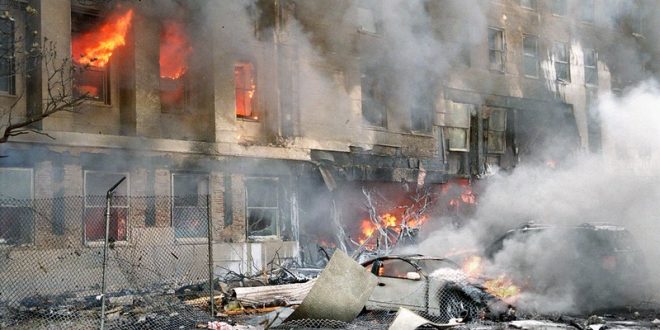
On Thursday, Sept. 10, VSU’s political science department held a remembrance event to honor and bring light to the tragic 25-year anniversary of the terrorist attacks of Sept. 11, 2001.
Guest speaker, Dr. Edward Ted Duggan shared his experience. Dr. Duggan is an associate professor of political science at Tallahassee State College and is the recipient of the National Institute for Staff and Organizational Development Award.
While many remember 9/11 as a sad event that occurred on national television, Dr. Duggan had a rather unique experience of the event.
He told of how he was working in Saudi Arabia as an English teacher for Saudi military personnel during the events.
The presentation was a tribute to Major Wallace Cole Hogan Junior, a graduate and alumnus of VSU. He was a U.S. Army officer who lost his life at the Pentagon during the attacks.
Dr. Duggan described the reaction of his students during the attack.
“I walked into the class, and it felt like Easter, Christmas, and their birthdays, all at the same time. They were excited, they were happy.”
Dr. Duggan was a swim coach in Saudi Arabia at the time of the event. He explained Saudi customs and how the children were excited because of their relation to the attackers.
Most of his students were cousins from the same tribes with the same last names. They shared the same ideology as the attackers.
He explained how he thought it was disturbing that people could celebrate the loss of lives.
During the presentation, Dr. Duggan discussed the events leading up to the Sept. 11 attacks and the lasting pain it left.
He mentioned the rise of Al Qaeda, the spread of Wahhabism and Salafism, and how many of these signs were being ignored.
He discussed the Iraqi invasion of Kuwait and how it led to one of the biggest contributors to the attack.
After Saddam Hussein’s forces took over Kuwait, Saudi Arabia feared that it could be the next target. As a result, 500,000 American soldiers were positioned in Saudi Arabia to defend Saudi territory.
Afterwards, the U.S. continued to keep bases there, and Osama Bin Laden, the mastermind of the 9/11 attacks, viewed this as the U.S. occupying their Holy Land.
There were also earlier attacks, including the 1993 bombing of the World Trade Center, the 1999 Millennium bombing plot, the USS Cole bombing off Yemen, and the 1998 Embassy attack in Kenya and Tanzania. These attacks were all carried out by al-Qaeda.
He said how the United States could have done more to prevent this tragedy.
Dr. Duggan specifically brought to light the name John O’Neill”. O’Neill was an FBI agent who focused heavily on al-Qaeda and Bin Laden.
He investigated and studied previous attacks, connecting many to al-Qaeda. He is one of the few who had already recognized that al-Qaeda posed a threat to the United States.
“John O’Neill made more political enemies,” he said.
O’Neill eventually lost his life helping save people from the fallen Twin Towers.
The U.S. turned a blind eye to many of the worrying events that were occurring, Dr. Duggan said.
“No one that was paying attention was shocked by what took place,” he said.
Dr. Duggan emphasized why the attacks happened, but he also touched on some of the aftereffects of 9/11.
As for Dr. Duggan himself, he left Saudi Arabia and returned to the US only a month after the attack. The effects of the attack left a mental toll on him. He was left depressed and left heartbroken, as many were.
As for long term effects, there grew an increased concern about national security and terrorism. For Dr. Duggan, Sept, 11 isn’t just about remembering, but also looking at the bigger picture.