 The Spectator The independent student newspaper of Valdosta State University


By Aileene-Bjork Novascotia, Staff Writer
“Tonight on Dateline, This Man Will Die” is a 2007 Esquire article written by Luke Dittrich. From a first glance, you can expect it to tackle mature subject matter, but with a name like that, you can’t help but read it. Lance Oppenheim’s debut feature film based on said article, “Primetime,” created a similar feeling within me. I’ve seen “To Catch a Predator,” so I went in knowing what shocking events were about to be shown, only to discover how irresistible this movie’s delivery was. While “Primetime” isn’t perfect, once it has your attention, it won’t let go, creating a thrilling experience that left my jaw hanging several times.
“Primetime” unfolds around the height of “To Catch a Predator” back in the 2000s, before the idea of catching child predators in sting operations became popular on the Internet. The movie begins with a recreation of an average segment on “To Catch a Predator,” with all the show’s regular conventions intact–from the moment the predator greets the decoy, to him being apprehended by police. After that, the behind-the-scenes footage is shown, and it’s here when we know that “Primetime” isn’t necessarily just about “To Catch a Predator.”
We’ve seen movies reflect what effects media have on an audience, but “Primetime” is aiming to show us what effects they can have on the people that create it. What kind of people can we become?
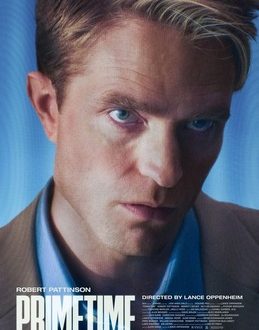
Robert Pattinson’s Oscar-worthy performance as investigative journalist Chris Hansen helps to answer that question, and he steals the show with all his efforts.
Despite barely looking different from his usual self, Pattinson manages to still become unrecognizable in this role with how well he mimics Chris Hansen’s mannerisms. Hearing Hansen’s common phrases like “Have a seat” or “You see how this looks, right?” exit his mouth while barely changing facial expressions looks and sounds exactly like the real deal.
However, the Chris Hansen that we see in “Primetime” becomes a complex character whenever he’s not on camera. This portrayal of Hansen is much different from the one that we’ve seen on TV, with Pattinson playing a more relentless, fame-hungry version of him. We see a more vulnerable side of Hansen, –one that’s over-obsessed and sometimes emotionally compromised.
On the other side of the spectrum, we’re introduced to Skyler Gisondo’s Daniel Plum, who wants to become a member of the Screen Actors’ Guild, only to be cast as a decoy for the predators. From there on out, we get to watch him evolve as his appearances on the show continue. It gives us insight into how this line of work can take a toll on a person in his position, and how he values himself. He may be coming face to face with monstrous humans for a good cause, but this definitely wasn’t his ideal acting gig.
What journey this movie ends up being for these two and the Perverted-Justice crew winds up being overly dramatized and intense. It works though and definitely functions at its best in the second half when the crew tries hunting a predator whose high-ranking position will put “To Catch a Predator” at the top of TV listings with a special episode.
In other corners, “Primetime” can get disturbing without much effort required, as expected with the subject matter. Sometimes, it even treads into abstract territory to further enhance the impact of certain moments, like darkening the room during a face-to-face tirade with a predator to represent Hansen almost losing his composure.
Complimenting these are the visuals. It makes perfect sense that “Primetime” has a high amount of contrast, not just because of its extremely dark tone, but because it also highlights the suggested complexities in its characters and how people tend to thrive on negativity.
Coupling the appearance with the structure and cinematography, the presentation of “Primetime” suggests that catching predators is the crew’s primary motive, but being on television ranks a very close second–possibly even at an equal level. In that regard, “Primetime” doesn’t paint Hansen and company as just heroes or villains, but instead blurs them somewhere in the middle.
Therefore, this is no biopic. You would be better off thinking of “Primetime” as a thriller based on true events, doused in the darkness of the world we live in. It manages to keep up this tone, even in the more lighthearted moments, all the way to its final scene. As someone who has read Dittrich’s article, I knew what was to unfold at the end. Yet when it finally happened, the movie was still able to shock me.
Oppenheim’s “Primetime” is an interesting depiction of one of TV’s most controversial reality shows, but also those behind the cameras. Its style will undoubtedly hook you as much as the electrifying performances that power it, and that’s definitely the greatest part of the film. However, what you’re left with is questions about TV ethics that will leave you at a standstill once the credits begin rolling, as you’ll contemplate everything you’ve just witnessed. Anything with that kind of power undoubtedly makes for one of the best movies of 2026.
I rate “Primetime” an 8/10.